Every genre comes with instructions.
Westerns have showdowns. Romantic comedies have misunderstandings. Shakespearean comedies have disguises. Murder mysteries have suspects, motives, clues, red herrings, and a final explanation in which everything suddenly fits together.
People sometimes talk about those conventions as limitations. I think they are invitations.
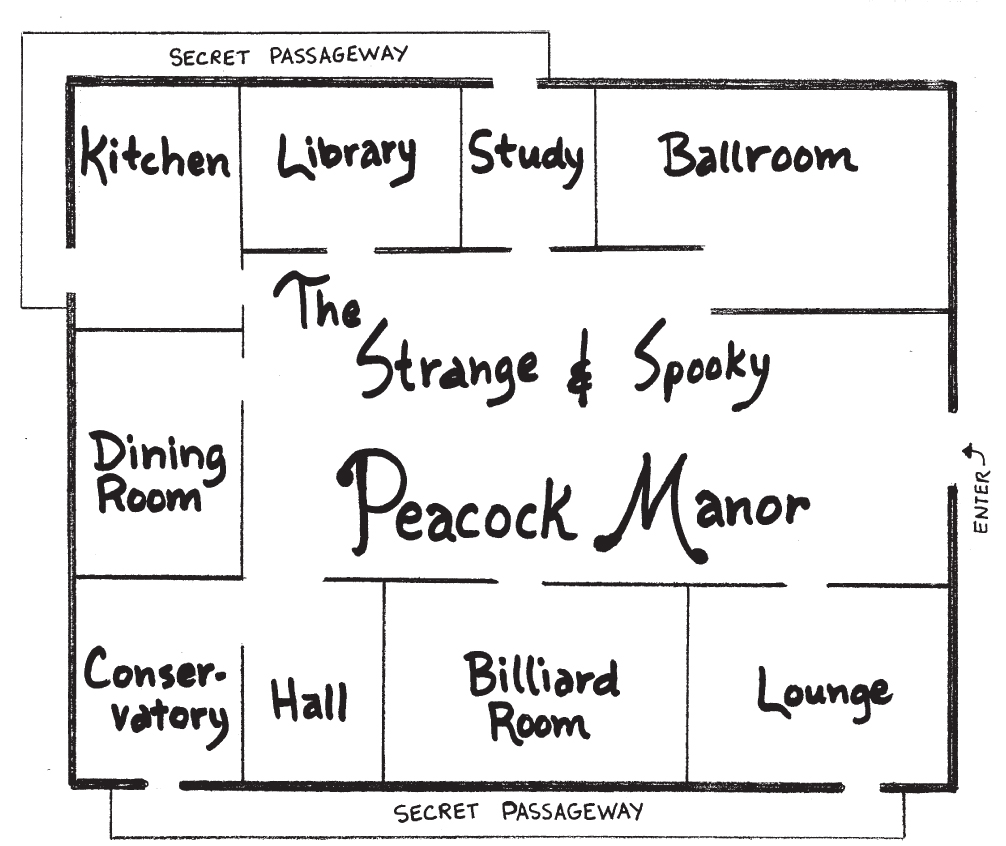
The Case of the Maltese Ferret begins with a structure familiar to anyone who has played Clue: one body, six suspects, six murder weapons, and nine rooms. Before a character speaks, the audience knows what kind of game it has entered.
That is not a problem to overcome.
It is a gift.
When the audience understands the rules, it begins writing the play alongside you. Every clue is measured against what it already suspects. Every suspect is quietly ranked. Every revelation is tested against a solution taking shape in the dark.
That is where the fun lives.
Parody does not work because it ignores the rules. It works because it knows them intimately. Elliot Brick is funny not because he cannot reason, but because he makes perfectly logical deductions from incomplete evidence and announces the wrong answer with complete confidence.
The audience recognizes the detective story, recognizes the mistake, and enjoys the distance between those recognitions. Without that shared fluency, there is no joke — only a detective making mistakes.
Institutions come with instructions too.
Forms. Committees. Hearings. Minutes. Procedures everyone follows because everyone else follows them. These rules also begin as useful shortcuts. They save us from solving the same problem twice. They promise fairness, consistency, order, even justice.
The danger begins when the shortcut outlives the destination.
The rule keeps working.
Only the purpose disappears.
That is where the two kinds of rules meet in Mystery Theatre Unlimited. The mystery teaches the audience to expect that procedure will uncover truth. The institution teaches the characters to expect that procedure will produce fairness. Comedy begins when both promises are honored with great seriousness after one of them has already failed.
In Signfeld 2040, Del Boca Vista still has regulations, resident concerns, inspections, committees, bingo procedures, and procedural fairness. Every mechanism remains intact. The only thing that has become difficult to identify is what those mechanisms were meant to accomplish.
The detective arrives believing the system will reveal the truth.
The system believes that too.
That is the joke.
The comedy does not come from irrational people. It comes from rational people trying to honor a structure that no longer remembers its purpose. The forms circulate. The committee deliberates. The minutes are approved. The meeting adjourns. Everything functions, and everyone is farther from justice than when they began.
Form creates pressure. Pressure reveals character. A suspect improvises when the evidence closes in. A bureaucrat reaches for another form when judgment is required. In both cases, the rule does more than organize the scene. It exposes what the character trusts.
That trust is why the comedy can turn so quickly. The process designed to protect begins protecting itself. The ritual designed to create order begins creating absurdity. The rule designed to serve judgment begins replacing judgment.
If a character cannot tell the difference between procedure and morality, the audience probably can.
That gap is where the laughter starts.
But it never stays there.
We laugh because we recognize the machinery. Then we stop laughing because we recognize our place inside it.
Rules are not the enemy of originality. They are what make originality visible. Surprise exists because expectation came first. But rules are not morality either. They are tools, and every tool eventually has to answer the question its users would rather avoid: what are you for?
The joke is never that people follow the rules.
The joke is that the rules became the reason for themselves.
Nobody noticed the purpose leaving the room.
Only the audience did.