Deb Moss has a problem. She pawned her late father-in-law’s hunting knife to cover a family expense, and now she needs to get it back before her husband discovers what she’s done.
She’s three dollars short.
With closing time approaching, Deb calls her old friend Ray Kistler for help. But when she describes the knife, something in Ray changes. He knows it. And when Ray arrives at Talbot Pawn & Loan, the shop’s owner knows him.
What begins as an awkward attempt to undo one small act of dishonesty becomes a reckoning with an old partnership, a long-settled accusation, and the uncomfortable possibility that telling the truth isn’t always the same thing as telling all of it.
About the Play
The numbers can balance and something can still be owed.
Unredeemed is a play about moral accounting: what people owe one another, what can be measured, and what cannot.
Its pressure comes from a small, ordinary transaction. Deb wants to put something back before anyone notices it was gone. Duke believes every account should balance. Ray has spent years becoming very good at answering the questions people actually ask him.
The play lives in the distance between innocence and absolution—between being able to say, truthfully, I didn’t do that, and being able to say there is nothing left to answer for.
Artifacts from Talbot Pawn & Loan
Every object has an account to settle.
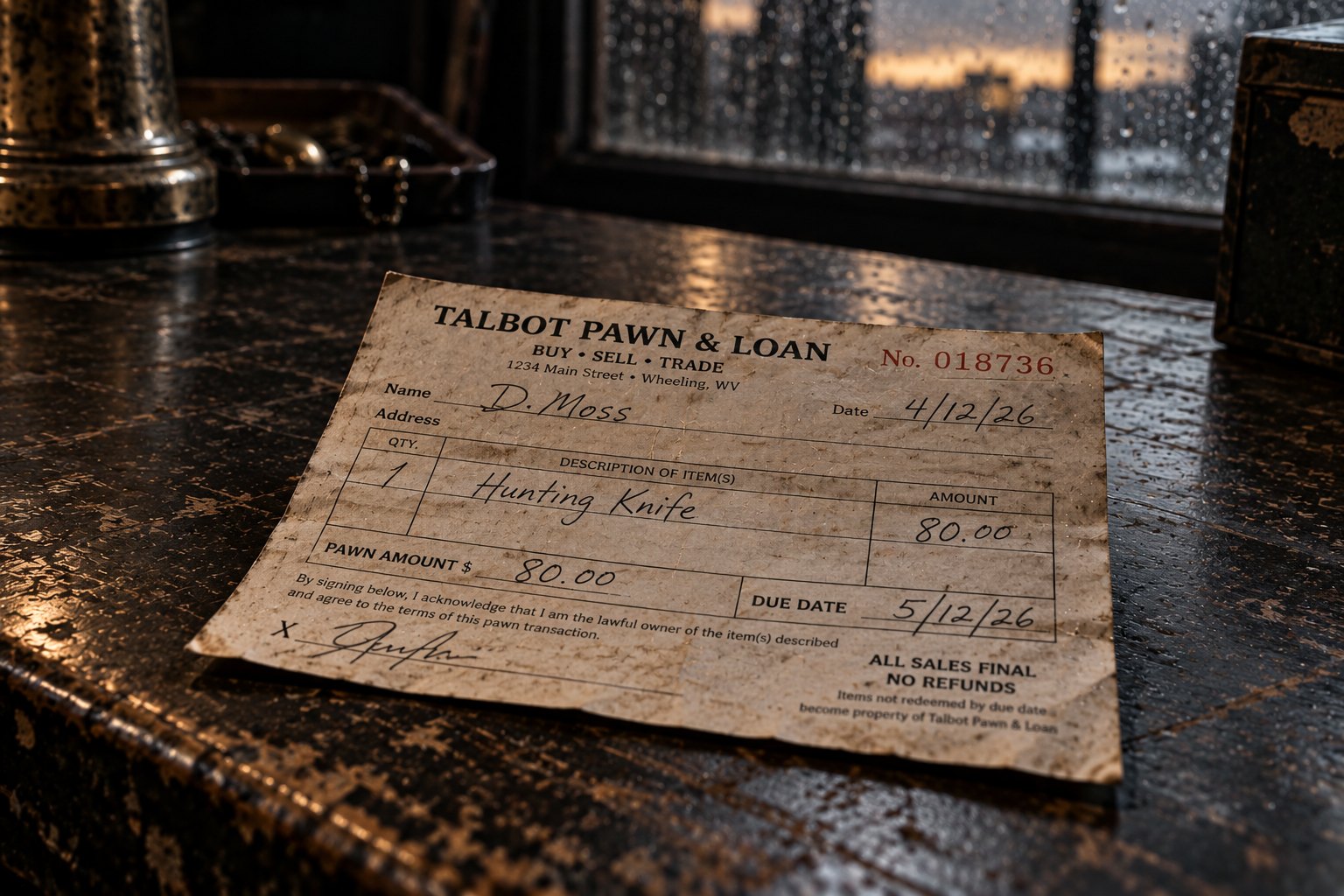
01 / Deb’s pawn ticket
“It’s on the ticket.”
Thirty days to redeem it. Ninety-five dollars owed. Deb has ninety-two, and the knife needs to be home before her husband packs for camp.
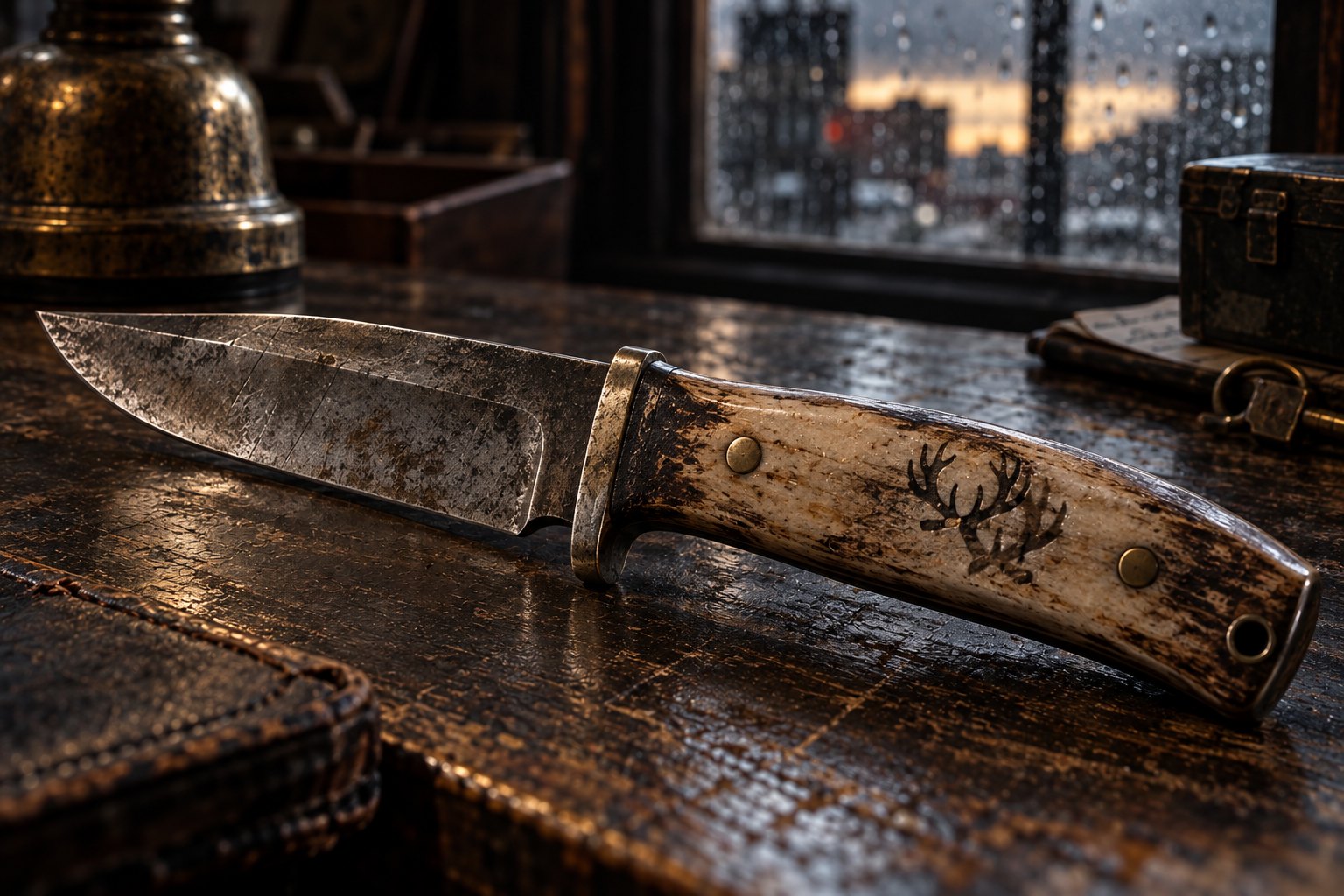
02 / The hunting knife
A mark struck twice.
Deb knows it as Frank’s knife. Ray recognizes it before he arrives. Duke turns the grip toward the light, and the transaction begins to change.
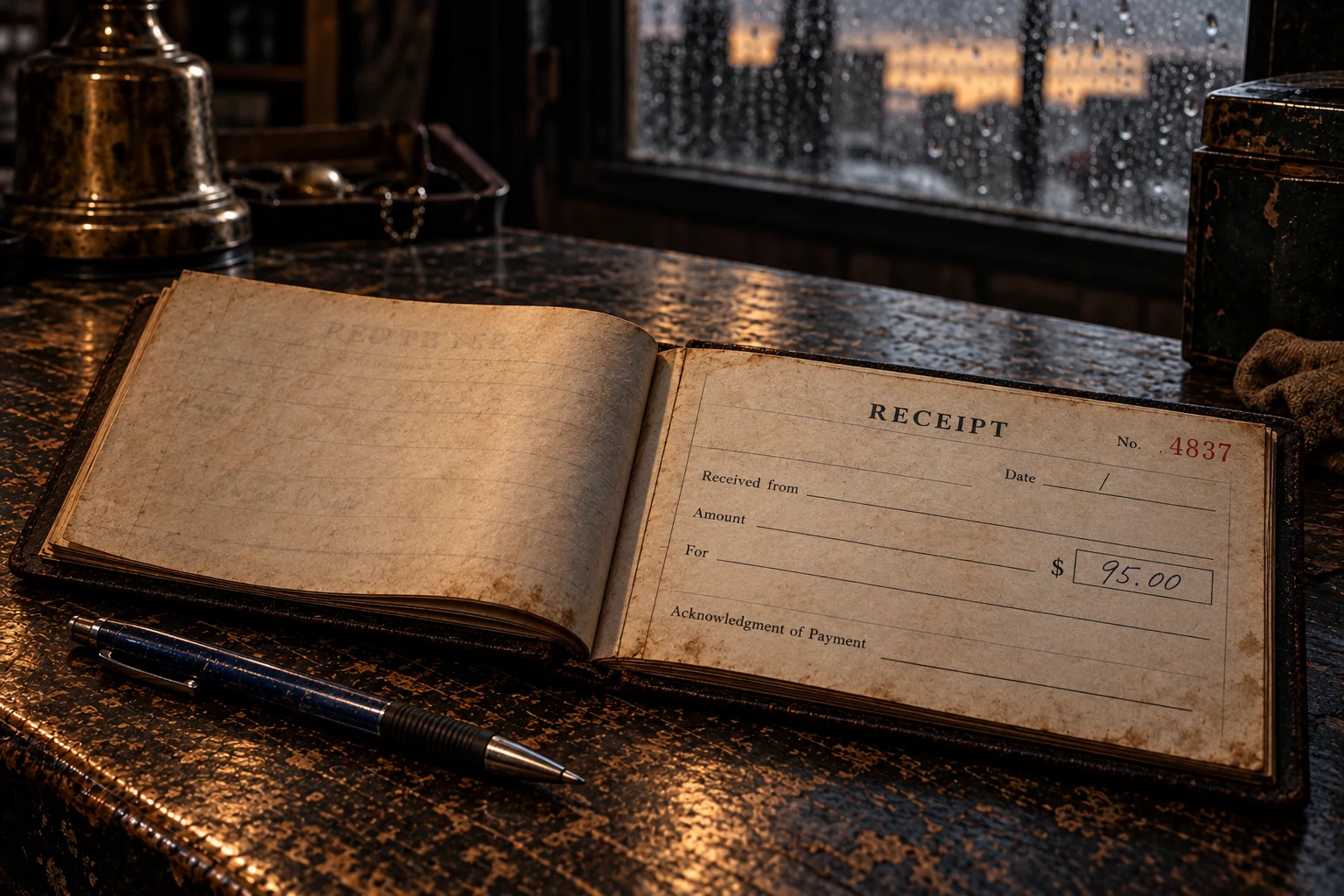
03 / The receipt book
The payment line is blank.
Duke writes down the amount before Deb can pay it. The book is ready. The money is three dollars short. The account stays open.
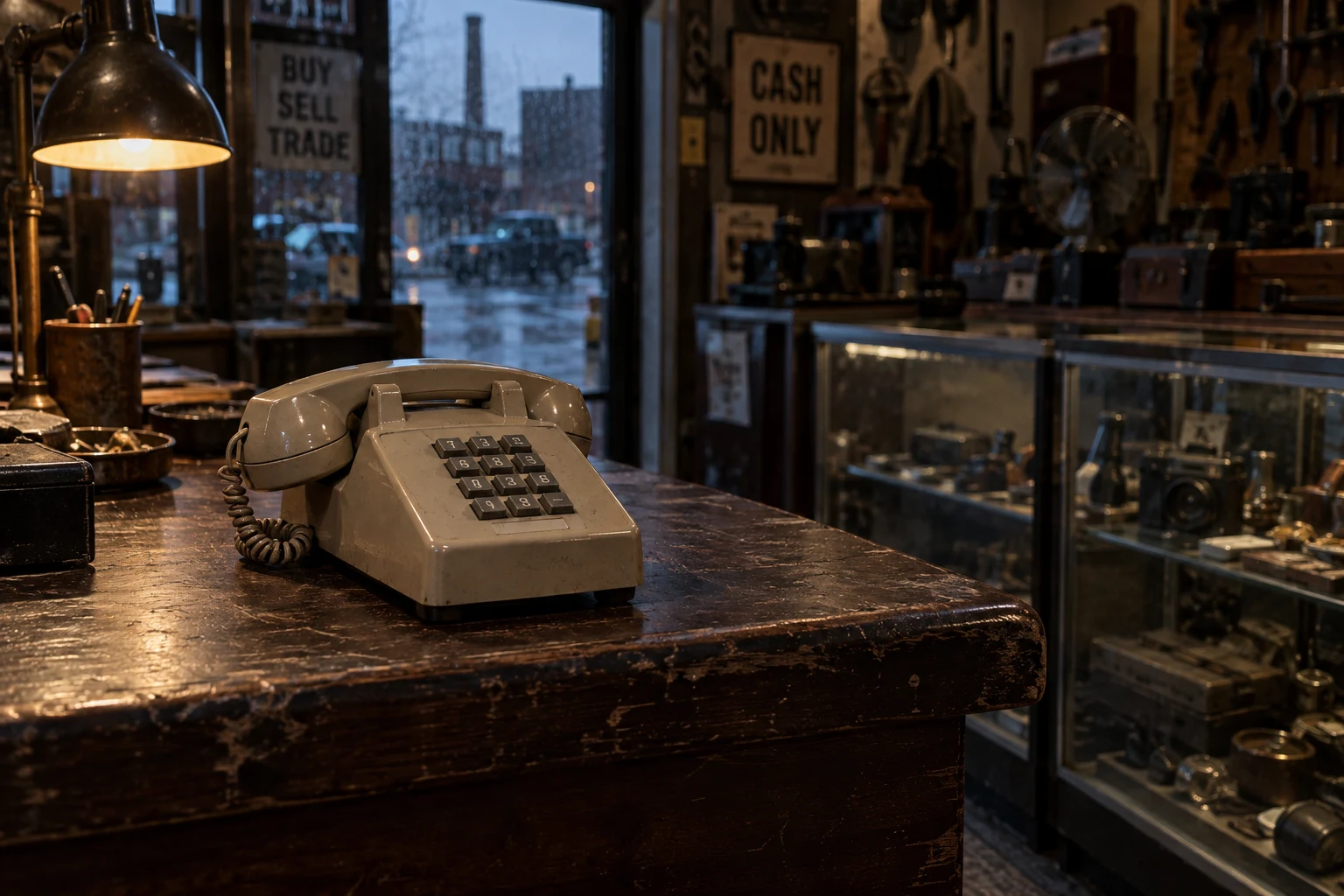
04 / The shop telephone
One call for three dollars.
Deb’s cell phone has no signal. The shop’s landline has an absurdly short cord—and a speakerphone that makes a private favor everybody’s business.
Artwork inspired by the script. Select an image to view it in full.
In the Room
One set. One clock. One gate.
Closing time is not a metaphor until it is.
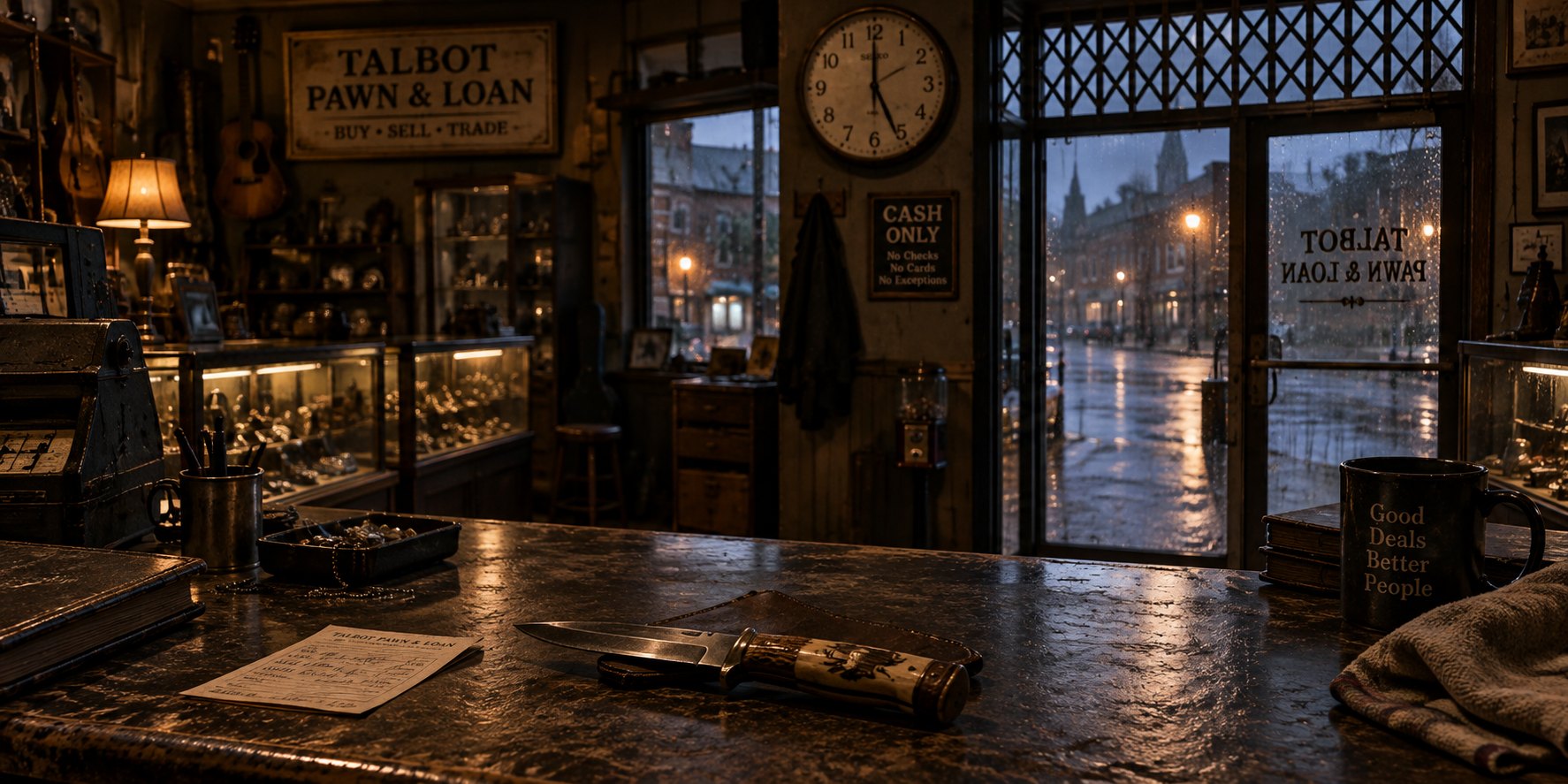
The entire play occurs in the public room of Talbot Pawn & Loan. The clock is visible. The manual security gate is visible. Duke closes that gate at exactly five o’clock every day.
At first, those are simply the rules of the shop and practical obstacles in Deb’s effort to get the knife back. As the room changes, the same objects begin to carry different weight.
The production should resist announcing that change. The shop remains a shop. The clock keeps moving. The gate comes down because it is five o’clock.
Companion plays
A full evening of dark comedy.
Unredeemed is a companion piece to Contestable. The two shows can be played together as a full evening of dark comedy.
If you’re considering Unredeemed for your production, download a sample here, visit New Play Exchange for the complete script and production information, or request a reading copy directly.
The sample downloads directly from this site—no registration required. The complete script is available to NPX subscribers, or you may request a reading copy directly.
“What do we owe another person when doing the right thing may cost us something we are terrified to lose?”