The moments that moved me most in Places were the smallest ones.
I didn’t direct the production. I sat in the audience at Towngate Theatre and watched someone else rehearse my play. That’s its own strange experience—and probably another reflection. This one is about what I learned from that seat.
Late in the play, Eli asks Sarah, “Want company?”
She answers, “Yes. I do.”
Three words.
I wrote them almost without thinking—a hinge between scenes, connective tissue that simply moved the conversation forward. Jenn Kellner-Muscar, playing Sarah, discovered something else entirely. She waited. Just long enough for the silence to become part of the sentence. Then came the smallest tremor on I do.
It devastated me.
Every performance.
I knew it was coming. I’d seen it the night before, and the night before that. It landed anyway.
I want to be precise about this: I didn’t write that pause. I wrote the words the pause lives between.
Jenn discovered the weight. She did it again in a completely different key.
Sarah’s husband, Tom, drops by rehearsal and tells her he’ll have pizza waiting at home. Her scripted reply is simply:
“Pizza. Right.”
I wrote it as quiet acceptance—a wife who has stopped expecting to be understood. Jenn answered with the smallest gesture imaginable: two finger-guns.
It got a laugh, because audiences recognize relationships that have learned to communicate through shorthand. Two words and two finger-guns revealed that marriage faster than another page of dialogue ever could.
I intended none of it.
The pause. The tremor. The finger-guns.
None of it is in my script.
All of it is in my play.
The script is what I hand over. The play is what happens when other artists begin living inside it. A playwright who specifies every pause, every inflection, every turn of the head isn’t protecting the work. They’re quietly evicting their collaborators before they’ve had a chance to arrive.
Nobody warned me about “Yes. I do.”
One more example—and this one required two discoveries stacked on top of each other. On the page, The Director is only a voice from the back of the auditorium.
Early in the play, Sarah makes an observation about Oscar Wilde’s text. The Director answers with an exasperated, “Oh, God...” before joking that they should have hired a dramaturg. On the page, it’s a throwaway—a joke theatre people would recognize.
Our director, Cassandra Hackbart Majetich, made a choice that changed the moment completely. She put The Director onstage for the opening scenes.
That gave the character a body. Frank Wilson, who originated the role, discovered what to do with it.
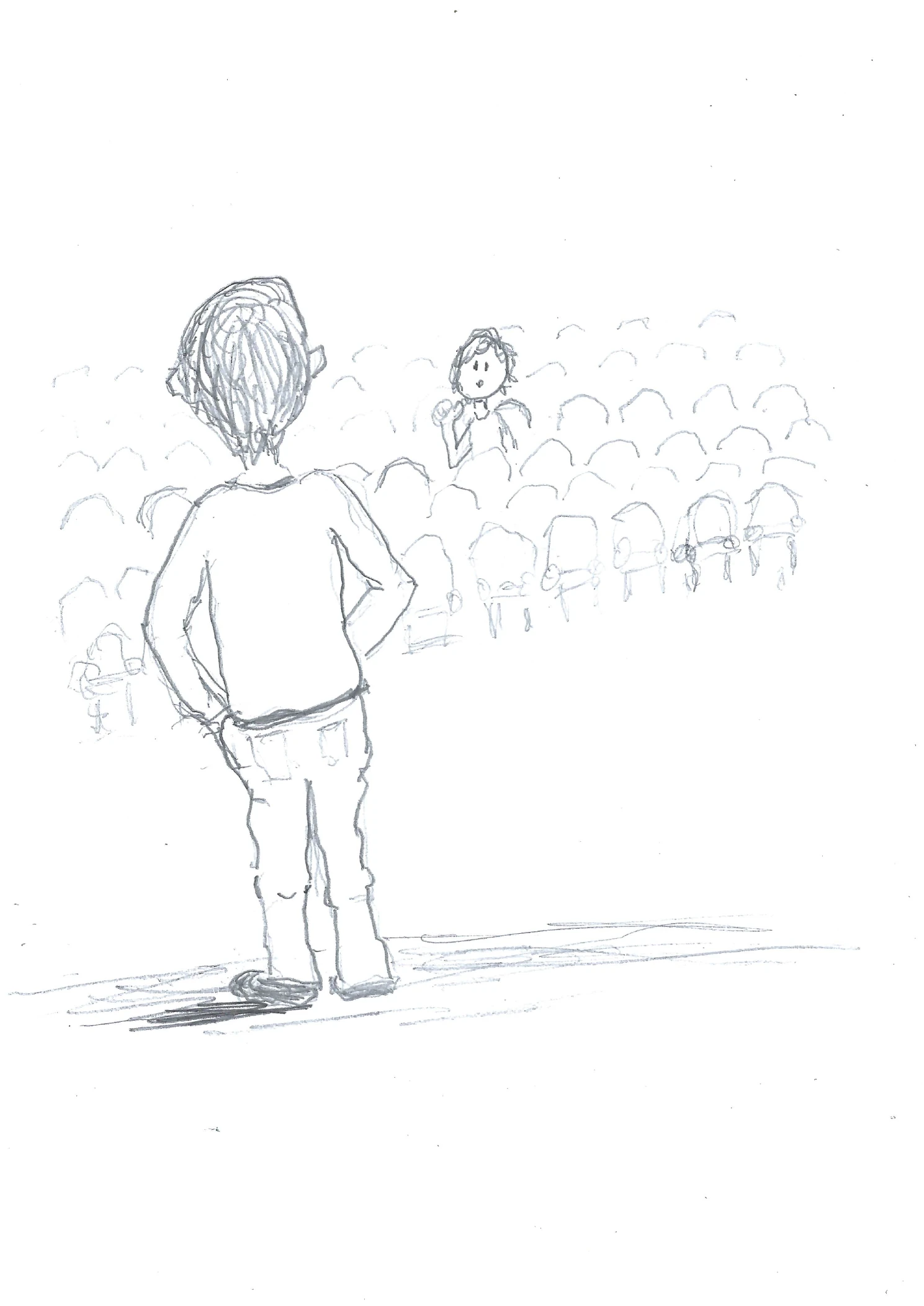
Standing near the stage with his back to the audience, he turned his face upward toward the stage lights and, with complete sincerity, delivered the line into the light above him.
“Oh, God...”
Not to Sarah.
Not to the cast.
To God.
Every director in the audience recognized the prayer.
I sat there night after night watching a man I’d written as a disembodied voice, standing in a body I hadn’t given him, lifting his face toward stage lights I hadn’t imagined, saying my words to God.
First the director discovered the body.
Then the actor discovered the prayer.
Neither discovery existed in my script.
Both existed in my play.
That may be the hardest lesson writing for the theatre has taught me.
I don’t finish plays.
I introduce them to the people who will.