People sometimes assume mystery and comedy are different machines. I don’t. A joke and a clue both depend on the audience making an intelligent mistake.
Both forms ask people to organize information. What matters? What can be ignored? Which details belong together? What kind of person is speaking, and what kind of scene are we watching? The audience begins sorting the moment the play begins. Comedy and mystery succeed by making that sorting feel natural, then showing us what our categories failed to contain.
A joke does it quickly. A sentence appears to be heading toward one meaning and arrives at another. An ordinary object becomes a punch line. A harmless phrase reveals an insult. Two ideas that seemed unrelated collide, and the audience discovers that the first half of the joke belonged to a different category than the one it assigned.
One kind of laughter is the pleasure of that correction. The mind revises its first reading and recognizes that the new one was available all along.
A mystery extends the same experience across an evening. Every clue encourages an interpretation. Every conversation feeds a theory. Every character gradually occupies a category: trustworthy, suspicious, comic, dangerous, irrelevant. Solving the mystery means revising those categories without losing sight of the facts that produced them.
That is why fairness matters in both forms. Fairness does not require the audience to understand the clue when it first appears. It requires the clue to be present and honestly represented. The playwright may delay its meaning, surround it with more entertaining information, or encourage the audience to give it the wrong importance. What the playwright cannot do is invent the necessary fact after the audience has finished looking.
More than thirty years of interactive murder mysteries let me watch this process from inside the room. Different tables saw the same scenes, noticed different details, trusted different suspects, and built incompatible explanations. People rarely missed a clue because it was invisible. They missed it because the play had taught them what kind of thing they thought they were seeing.
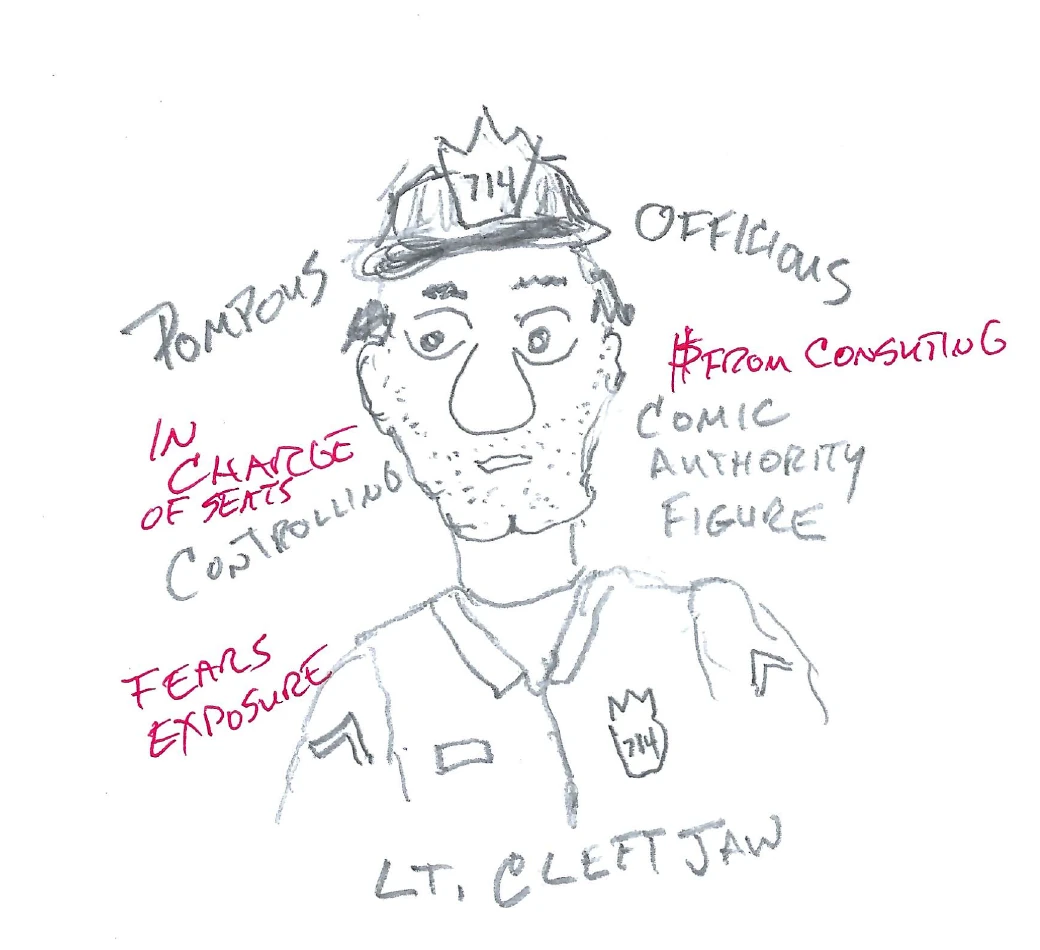
One of my favorite examples comes from The Case of the Black Velvet Notebook. Lieutenant Cleftjaw spends the evening trying to control the room. He tells people where to sit, what not to touch, and how the investigation should proceed. He is pompous, officious, and just funny enough that the audience classifies him as a comic authority figure. His need for control becomes part of the joke.
It is also the solution. When Cleftjaw is revealed as the murderer, no new evidence appears. His controlling behavior has been visible from the beginning. Every instruction about the room has been part of the truth. The audience laughed because the behavior was funny; the mistake was assuming that funny behavior could not also be evidence.
That distinction matters. Comedy is not camouflage pasted over the clue. Cleftjaw genuinely is ridiculous, and the audience reads him accurately as far as that reading goes. The mystery works because the first category is true but incomplete. The reveal does not erase the joke. It forces the joke to carry a second meaning.
The lesson reaches beyond murder mysteries. In any play, the audience possesses more information than it knows how to value. A room can look safe until we understand what happened there. A harmless character can become dangerous without changing behavior. A family story can become an accusation when one missing fact alters who had the power to tell it. The facts remain in place while their relationships change.
Comedy and mystery therefore share a mechanism but not an emotional destination. Comedy usually releases the pressure created by reclassification. Mystery increases it. The laugh says, “I see what that was.” The reveal asks, “What else have I been seeing incorrectly?”
A mystery does not need to hide the truth. It can give the truth an ordinary job—a joke, a habit, a piece of procedure—and let it work in plain sight until the old filing system fails. The mystery ends when the audience runs out of wrong places to put it.